

Readings
Exodus 12:3 to 6
Zechariah 9:9
Psalm 118:25 to 26
John 1:29
Matthew 21:1 to 11
1 Corinthians 5:7
You have not withheld your son, your only son…
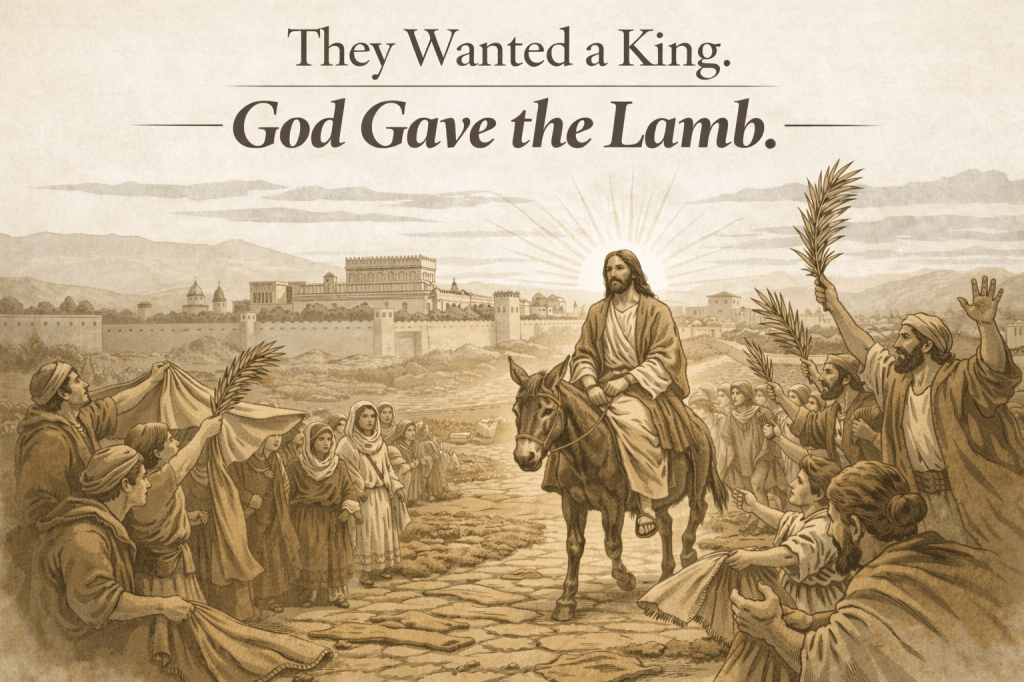
Palm Sunday is often read as a moment of celebration, and it is. Jesus enters Jerusalem to public praise. Cloaks are spread on the road. Branches are waved. The crowd speaks the language of welcome and hope. He is received as king.
But the holy week makes more sense when it is read in the context of Passover.
In Exodus 12, the lamb was chosen, brought near, kept until the appointed day, and then slain. It had to be without blemish, and its blood marked out those who would be spared under judgment. That background places Jesus’ entry into Jerusalem within Passover before the meaning of the cross is fully revealed. He enters the city publicly during the feast, fulfilling prophecy before the eyes of the people, as the one John had already called the Lamb of God who takes away the sin of the world. The week is moving toward sacrifice from the moment he enters the city.
Jerusalem sees a king entering the city, but God is setting forth the Lamb.
Palm Sunday uses the language of kingship, and that language is fitting. Zechariah is being fulfilled, and the crowd’s words echo Psalm 118. Jesus really is the King. But he enters Jerusalem on the way to sacrifice, not political takeover. Many were willing to welcome a Messiah who fit their hopes. They were not prepared for the Messiah God had actually given them.
Passover had always taught Israel that deliverance comes through sacrifice. Redemption does not come through the force of public expectation or the strength of national hope. It comes through the death of a substitute under the judgment of God.
Jesus remains before the people through those days in Jerusalem. He teaches openly. He cleanses the temple. He answers challenges. He is questioned, watched, accused, and tested. Exodus required a lamb without blemish. The Gospels give us a week in which Jesus stands examined in full view before he is handed over.
Most of those present did not see that God’s purpose was unfolding before them. But God was not reacting to events as they unfolded. The death of Christ was not an interruption in his mission. It was the plan ordained before the foundation of the world, now unfolding in plain sight.
That also makes clear how different the people’s expectations were from Jesus’ actual mission. Many wanted visible rescue and the kind of victory that made sense on their terms. Jesus came to deal with sin, guilt, judgment, and the rebellion of the human heart. He came to restore relationship and reconcile sinners to God by giving himself in their place. What happened that week cannot be reduced to disappointed expectations or a crowd turning. God was doing what he had always promised to do. Jehovah Jireh – The Lord will provide. In Jerusalem, he was providing the sacrifice himself.
That same confusion is not hard to find in us. We want help with the visible problem. We want relief that arrives quickly. But God, in his mercy, goes deeper. He deals with the heart that does not naturally trust him.
Before Passover, the lamb was brought near before it was given up. God did not hide redemption. He set his Son before the people. Jesus entered the city publicly, stood before the nation, and was offered for it.
Palm Sunday begins with the language people had for kings. Passover reveals what God was doing all along. Jerusalem wanted the kind of salvation it could recognize on sight. God gave his people the Lamb they actually needed. God never meets us on just our terms. He never “fits” into the plans we have made for ourselves. That is hard for us to accept. We must learn to receive Christ as God gives him, trust the salvation God provides, and submit ourselves to a wisdom greater than our immediate wants. God is not failing us when he refuses to serve our lesser expectations. He is merciful enough to give what truly leads to life, for his glory and for our good.
“‘For I know the plans I have for you,’ declares the Lord, ‘plans to prosper you and not to harm you, plans to give you hope and a future.’”
Jeremiah 29:11 NIV
Discussion Questions
- Why is it possible to speak rightly about Jesus and still misunderstand him at the center of his mission?
- In what areas of life are you most likely to measure God’s faithfulness by immediate relief rather than by his work to make you holy and reconcile you to himself?
- How can you tell the difference between asking God for help and quietly insisting that he solve things on your terms?


Leave a comment