

The Fear of Vulnerability
“Therefore each of you must put off falsehood and speak truthfully to your neighbor, for we are all members of one body.” Ephesians 4:25
If dating app burnout asks, “How do I connect with people in a healthy way?” The next question is often, “How do I let someone really know me?”
For many Christians, vulnerability sounds wonderful in theory and terrifying in practice.
What do we want? Intimacy! When do we want it? NOW! What do we want? Connection! When do we want it? NOW!
So why do people shy away from these healthy things?
It’s because we also know something else: people can hurt us. If you’ve trusted before and been betrayed, if you’ve shared your heart and had it dismissed, if you’ve been mocked, rejected, abandoned, cheated on, or lied to- it can make us fearful of risking vulnerability again.
So instead, many of us learn to wear masks. We present the polished, carefully edited most likely to be accepted version of ourselves.
The problem is that relationships built on masks can never experience true intimacy.
Because if someone falls in love with the mask, they still haven’t met the real person.
What Is Vulnerability?
In simple terms, vulnerability is the willingness to be honestly seen. It is allowing another person to know who you truly are rather than who you think they want you to be.
Vulnerability means sharing your thoughts, feelings, preferences, experiences, hopes, fears, strengths, and weaknesses appropriately and honestly.
Notice one important word: Appropriately.
Vulnerability is not telling everyone everything, it’s not emotional dumping, it’s not sharing your entire life story with a stranger over coffee. Vulnerability is simply choosing honesty over performance.
A Biblical View of Vulnerability
Scripture repeatedly calls believers to live truthfully.
Ephesians 4:25 says:
“Therefore each of you must put off falsehood and speak truthfully to your neighbor.”
And James 5:16 reminds us:
“Confess your sins to each other and pray for each other so that you may be healed.”
Notice that God does not call us to pretend. He calls us to truth!
Biblical vulnerability is not reckless exposure. It is allowing ourselves to be known while exercising wisdom and discernment.
Vulnerability Throughout Scripture
The Bible is filled with imperfect people who allowed themselves to be seen.
David wrote much of the Book of Psalms and that book is one long lesson in vulnerability! David expressed joy, fear, anger, confusion, grief, repentance, and hope. He did not hide his emotions from God. He brought them honestly before Him.
In 1 Samuel 1, Hannah poured out her grief before God, in public, regarding her infertility. She wasn’t pretending to be fine or hiding her pain. She brought her authentic heart before the Lord.
Paul frequently acknowledged his struggles and weaknesses. In 2 Corinthians 12:9, God tells him: “My grace is sufficient for you, for my power is made perfect in weakness.”
Paul learned that weakness honestly acknowledged became a place where God’s strength could be displayed.
Perhaps the greatest example comes from Jesus Himself. In the Garden of Gethsemane, Jesus openly expressed His anguish. He invited His closest disciples to remain near Him. He prayed honestly before the Father. His vulnerability was not weakness. It was strength under surrender.
Why Are We Afraid of Vulnerability?
Most people aren’t afraid of vulnerability itself. They’re afraid of what might happen afterward.
We fear:
- Rejection
- Judgment
- Abandonment
- Betrayal
- Embarrassment
- Being misunderstood
- Being hurt again
Many people have legitimate reasons for these fears. Past relationships may have taught them that vulnerability is dangerous. But avoiding vulnerability creates a different problem. If nobody truly knows us, nobody can truly love us. They can only love the version we’re performing.
The Difference Between Vulnerability and Oversharing
One of the biggest misconceptions in dating is believing vulnerability means sharing everything immediately. It doesn’t!
Healthy vulnerability grows alongside trust. The first date is not the time to unpack every childhood wound, failed relationship, family conflict, financial struggle, and emotional scar. The other person hasn’t earned that level of access yet!
Likewise, date twenty is not the time to finally reveal major truths you’ve been hiding. Imagine someone spends months talking about traveling the world with you. Then suddenly you announce: “Actually, I hate traveling. I never want to leave my hometown.”
That’s not vulnerability. That’s withholding important information.
Healthy vulnerability reveals information at the pace trust develops. Just enough honesty for the current stage of the relationship.
Stop Wearing the Picture-Perfect Mask
Many people enter dating believing they must impress someone.
So they create a character.The adventurous version. The easygoing version. The sophisticated version. The always-happy version. The version that loves everything their date loves. Yet eventually the mask becomes exhausting.
Imagine pretending you love loud clubs, crowded venues, and late-night social scenes. Meanwhile, every flashing light overwhelms you. The music gives you a headache. And what you’d really enjoy is sharing an incredible chocolate dessert while talking for hours.
The truth eventually emerges. It always does. And the longer we hide it, the more confusing and painful the relationship becomes.
God never asks us to become someone else in order to be loved. He loves us exactly as we are! He calls us to walk in truth.
A Practical Guide to Staggered Vulnerability
Healthy Christians should think of vulnerability as opening doors rather than removing every wall at once.
Early Dating
Share:
- Basic values
- Faith journey
- Interests
- Lifestyle preferences
- Goals
- Personality
Keep deeper wounds private for now.
Growing Interest
Share:
- Past relationship experiences
- Lessons you’ve learned
- Family dynamics
- Areas of growth
- Personal challenges
Watch how the other person responds. Do they listen well? Do they show empathy? Can they handle sensitive information responsibly?
Serious Dating
Share:
- Significant life wounds
- Financial realities
- Future hopes
- Marriage expectations
- Parenting desires
- Areas where healing is still occurring
At this stage, transparency becomes increasingly important.
Pre-Engagement
There should be very few major surprises remaining.
Both people should understand:
- Core values
- Life goals
- Family expectations
- Financial situations
- Personal struggles
- Spiritual maturity
Marriage should not be built on discoveries. It should be built on understanding and acceptance.
Vulnerability Requires Courage
Vulnerability is risky. There is no way around that! Some people will misuse what you share, they will misunderstand you. Some people will decide you’re not the right fit.
But that’s actually part of the purpose. Dating is not about convincing someone to choose you. Dating is about discovering whether two people can walk together in truth.
If someone walks away because they discovered the real you, then they were never choosing the real you in the first place. The goal is not universal acceptance. The goal is authentic connection.
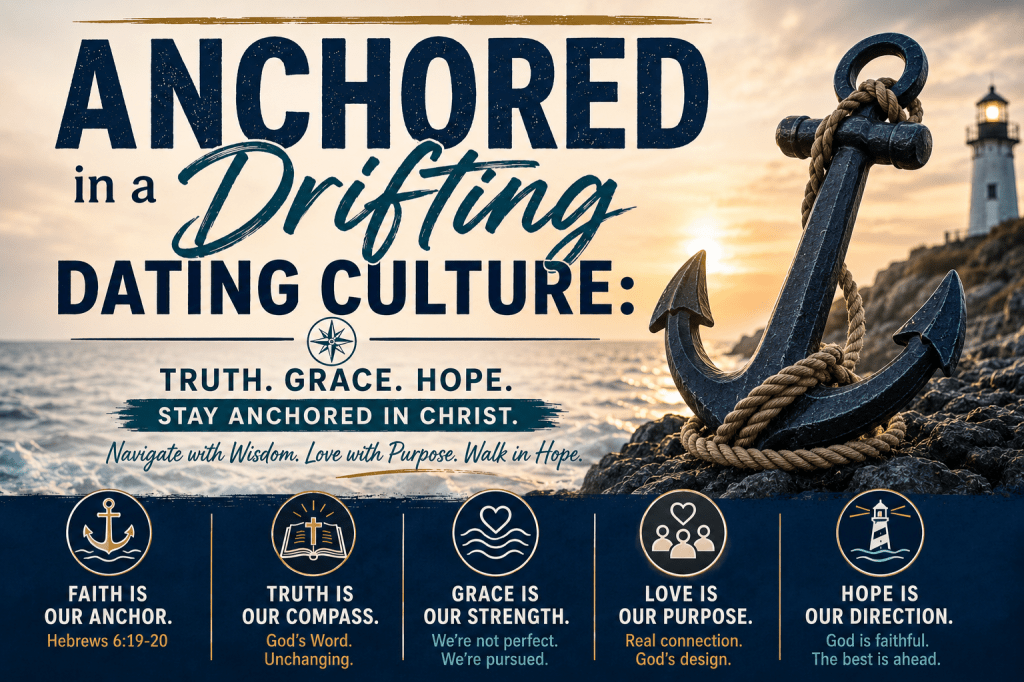
Stay Anchored
The fear of vulnerability often comes from placing our security in another person’s response. But our security was never meant to rest there. Our security rests in Christ.
When we know we are fully seen and fully loved by God, we become free to let others see us too, because our identity is not determined by whether another person accepts us.
Our identity is anchored in Jesus.
And when our hearts are anchored in Him, we can slowly remove the masks, speak truthfully, love wisely, and allow authentic relationships to grow in the light.
Healthy love is never built on pretending. It is built on our firm foundation in Christ.
 Breakwater Blessings
Leave a comment