
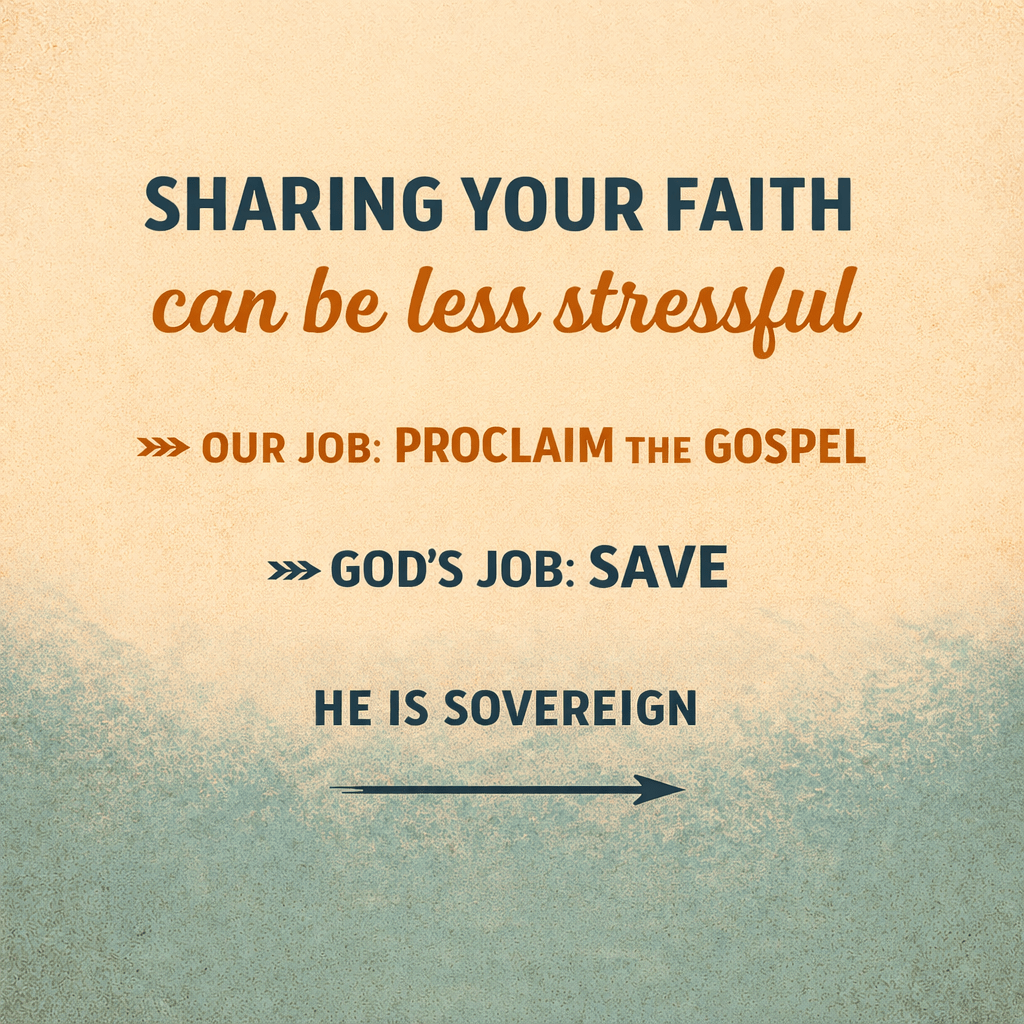

Don’t Feel Capable of Sharing Your Faith? You Are Called to Share, Not Convince
Many Christians stay quiet about the gospel because they feel responsible for too much. They worry about saying the wrong thing, not having the right answer, or not knowing what to do when the conversation gets hard. Under that is a deeper confusion about what belongs to them and what belongs to God.
Scripture is clear that we are called to bear witness to Christ, while God is the one who gives life. Paul writes, “I planted, Apollos watered, but God gave the growth” (1 Corinthians 3:6). We speak. God saves.
That does not remove responsibility from us. We should know the gospel well enough to explain it clearly. Peter says we should always be prepared to make a defense to anyone who asks for a reason for the hope within us, and to do it with gentleness and respect (1 Peter 3:15). That means Christians should be able to speak plainly about who Jesus is, what He has done, and the call to repent and believe in Him (Mark 1:15; 1 Corinthians 15:3–4).
At the same time, not every moment is the right moment to say everything. Wisdom matters. Discernment matters. Paul says to walk in wisdom toward outsiders and let your speech be gracious and fitting to the moment (Colossians 4:5–6). Jesus Himself taught that there is a difference between those who are ready to hear and those who only want to trample what is holy (Matthew 7:6). We should live ready to share the gospel clearly, while depending on the Spirit to help us know when and how.
A lot of believers hesitate because they feel underprepared. They do not know every argument or how to answer every objection. But Scripture never says the gospel advances through experts. Romans 10 says people cannot believe unless they hear, and they cannot hear without someone speaking the message of Christ (Romans 10:14–17). God has chosen to bring the gospel through ordinary believers who speak faithfully.
That truth should steady us. We are responsible for faithfulness, not outcomes. The new birth is the work of God, not the result of our skill (John 1:12–13). So we can take evangelism seriously without carrying panic.
It also means we should pay attention to the person in front of us. Proverbs warns against answering before listening (Proverbs 18:13), and James tells us to be quick to hear and slow to speak (James 1:19). Some questions are sincere. Some are defensive. Some come out of pain. Wisdom listens before it answers.
We also need to keep the center clear. Christian witness is about Christ. Paul resolved to keep the message centered on Jesus Christ and Him crucified (1 Corinthians 2:2). The power is not in polished words but in the gospel itself, for it is the power of God for salvation to everyone who believes (Romans 1:16).
A faithful life matters too. Jesus says His disciples are to let their light shine before others so that people may see their good works and give glory to the Father (Matthew 5:16). Peter says honorable conduct can give weight to our witness before the watching world (1 Peter 2:12). The fruit of the Spirit is not separate from evangelism. It is part of what makes our confession believable (Galatians 5:22–23).
So be prepared. Know the gospel. Be ready to speak it clearly. Ask God for wisdom to know when to say more, when to ask a question, and when to wait. Then, when the opportunity comes, speak faithfully and leave the saving work to the Lord.
You are not the Savior. You are the messenger.
 Breakwater Blessings
Leave a comment